How do you store move-in inspection photos so they still hold up years later?
Photos that vanished with an old phone or lost their timestamps in a group text prove nothing. Here is how to keep inspection records intact, findable, and credible for as long as a claim could surface.
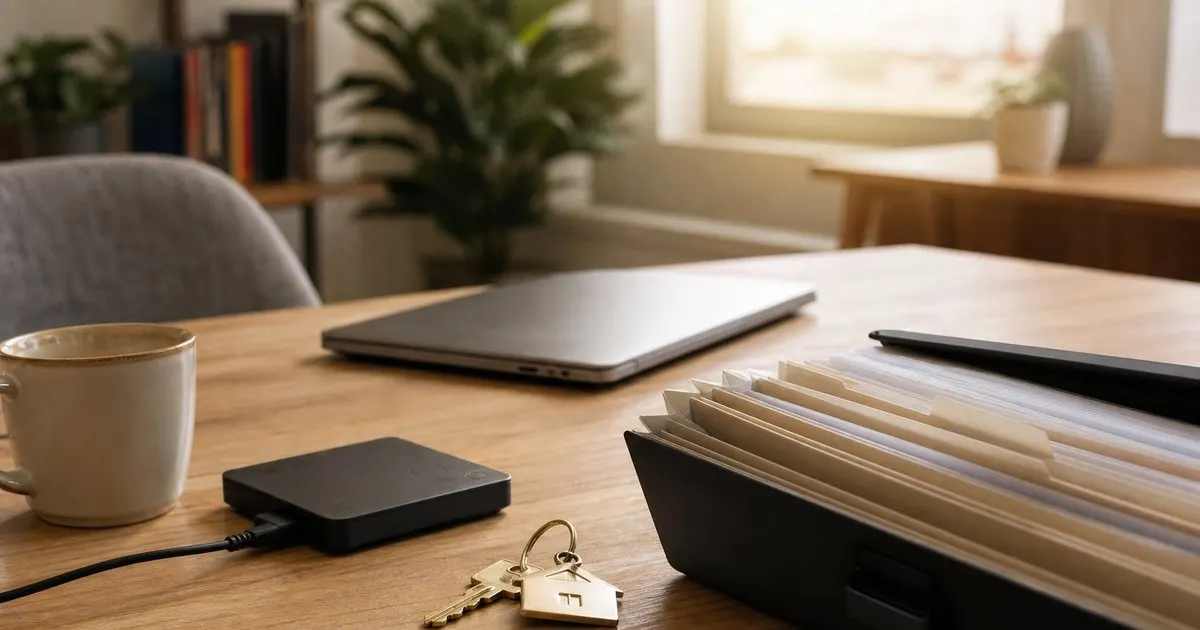
How long a condition record actually needs to survive
The deposit is usually settled within a few weeks of move-out, and most landlords stop thinking about the photos at that point. But the window for a tenant to sue over a deposit, or for a landlord to pursue damages beyond the deposit, is governed by your state's statute of limitations for contract or property claims, and that is often measured in years, not weeks. A tenant who moves out in spring can file a small claims action long after you have replaced your phone. Add long tenancies, and a move-in record might need to be produced seven or eight years after it was created. Related: Why do timestamped move-in photos protect landlords during security deposit disputes?
The safe rule is to keep the full record for every tenancy until the applicable limitation period has passed, then keep it a bit longer anyway. Storage is cheap and photos are small. Deleting a record early saves nothing and creates a risk that only shows up at the worst possible time. If you sell the property, hand the records for current tenants to the buyer and keep copies of everything else yourself.
Keep reading: Why do timestamped move-in photos protect landlords during security deposit disputes?, How should landlords document rental condition room by room before a tenant moves in?, What should a move-out inspection checklist include for a typical rental apartment?. See how MoveInSnap helps you move-in and move-out inspection photo logs.
Why the original file matters more than the picture
A photo's evidentiary value lives partly in its metadata: the capture date and time, the device, and often the GPS coordinates. That data is embedded in the original file. It survives a straight copy to a hard drive or an upload to a system that preserves originals. It frequently does not survive a text message, a social media upload, an email that resizes attachments, or a screenshot. A tenant's attorney does not need to prove the photo is fake; they only need to point out that the timestamp is gone and ask how anyone knows when it was taken. Related: When is the best time to complete a move-in inspection with your tenant?
Treat the original as the record and everything else as a convenience copy. Export originals from your phone in full resolution, keep them in a folder named for the property, unit, tenancy dates, and inspection type, and never rely on a shared copy as your only copy. Where possible, keep a written log alongside the photos that lists each image and what it shows, so that the metadata and the log corroborate each other.
A storage setup that survives a lost phone, a dead laptop, and a closed account
The simplest durable setup has three parts: a primary location that organizes the photos by unit and tenancy, a second copy on separate hardware or a separate service, and a habit of confirming that both copies exist after every inspection. A phone alone fails all three tests. A phone plus a laptop fails the second test if both live in the same house. Two independent locations, one of which is offsite or cloud-based, is the minimum that makes sense for records you may need to produce under oath.
Be careful with accounts you might close. Free storage tied to a phone carrier, an old email address, or a service you stop paying for can quietly disappear. Prefer a location you control and check at least once a year that the files open and the metadata is intact. MoveInSnap keeps original files and their timestamps in each unit's record, and lets you export the whole tenancy as a package, which is a reasonable primary location as long as you also maintain your own backup.
Organizing so you can find one specific photo in under a minute
Retention only helps if retrieval works. The test is simple: can you find the move-in photo of the master bathroom vanity for a tenant who left three years ago in under a minute? If the answer is a shrug, the records are effectively lost. Organize by property, then unit, then tenancy with the dates in the folder name, then inspection type, then room. Name files or label images by room and item rather than leaving them as camera-generated numbers. Related: How should landlords document rental condition room by room before a tenant moves in?
When a dispute does arrive, assemble a short package rather than sending everything: the move-in and move-out images of each disputed item side by side, the signed or delivered report, the itemized deduction statement, and receipts for the work. Judges and mediators appreciate a record that is easy to follow, and a landlord who can produce a clean package quickly tends to be believed on the details that are not in the photos. Related: How do landlords compare move-in and move-out photos to prove real damage?
- Keep inspection records until your state's statute of limitations for deposit and property claims has passed.
- Metadata is the evidence; texts, screenshots, and resized email copies often strip timestamps.
- Store originals in two independent locations and verify both after every inspection.
- Organize by property, unit, tenancy dates, inspection type, and room so any photo is findable fast.

Julien Jimenez
Julien Jimenez is an independent software builder based in Paris. He designs, ships, and operates focused SaaS products for small businesses and independent professionals. Read the full author page.
Prove condition with dated photos
Move-in and move-out inspection photo logs. MoveInSnap is built to help you put this into practice.
Start freeMore from the MoveInSnap blog
Why do timestamped move-in photos protect landlords during security deposit disputes?
How should landlords document rental condition room by room before a tenant moves in?
What should a move-out inspection checklist include for a typical rental apartment?
Get the MoveInSnap playbook
Practical guides on move-in and move-out inspections, straight to your inbox as we publish them. No spam, unsubscribe any time.