How much time should a thorough move-in inspection take for a two-bedroom rental?
Rushed inspections miss the spots that turn into deductions, and endless ones do not happen at all. Here is a realistic time budget and where the minutes actually go.
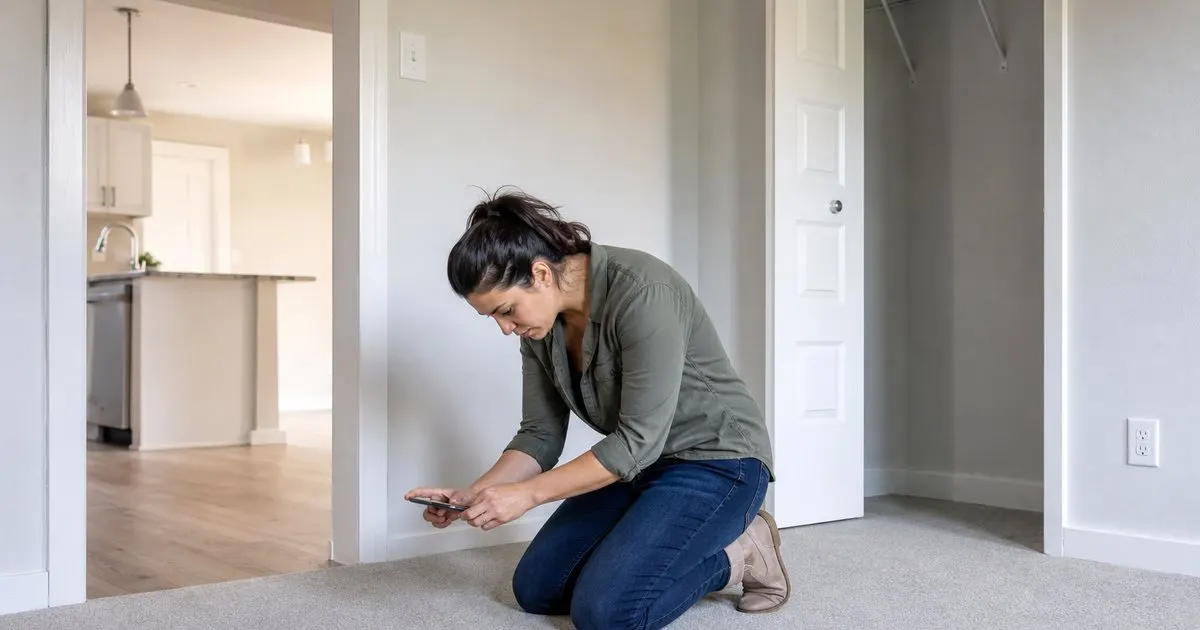
A realistic range, and why the range is so wide
For an empty two-bedroom apartment or small house in decent condition, a careful move-in inspection with a full photo log typically takes somewhere between forty-five minutes and an hour and a half. The low end is an experienced inspector with a fixed routine, working alone, in a unit that has just been turned over and has few defects to note. The high end is a first-time landlord, a tenant present and asking questions, a unit with an older kitchen and lots of existing wear, or a house with a yard and garage to include. Related: Why do timestamped move-in photos protect landlords during security deposit disputes?
The spread is mostly explained by three things: how many defects there are to photograph and describe, whether the inspector follows a fixed order or wanders, and whether photos are labeled as they are taken or sorted afterward. Sorting afterward is the hidden time sink. An inspection that takes fifty minutes on site and two hours at a laptop that evening is a three-hour inspection, and the evening part is the part people skip.
Keep reading: Why do timestamped move-in photos protect landlords during security deposit disputes?, How should landlords document rental condition room by room before a tenant moves in?, What should a move-out inspection checklist include for a typical rental apartment?. See how MoveInSnap helps you move-in and move-out inspection photo logs.
Where the minutes actually go, room by room
Kitchens and bathrooms take the longest, usually fifteen minutes or more each, because they have the most fixtures and appliances and the most surfaces that generate deductions: countertops, cabinet interiors, sink and faucet, stove and oven interior, refrigerator interior, dishwasher, disposal, tile and grout, tub and shower surround, toilet, vanity, exhaust fan. Each one gets a wide shot, a close-up of any wear, and a function check where relevant. Bedrooms are faster, often ten minutes each, with walls, floor, closet interior, doors, windows, blinds, and outlets. Living areas and hallways sit in between.
Add ten to fifteen minutes for systems and safety items that do not belong to any one room: smoke and carbon monoxide detectors (test them), the water heater, the furnace or air handler and its filter, the electrical panel, the thermostat, the main shutoff, keys and remotes counted, and the mailbox. Houses add exterior time that scales with the lot: a small yard and a single garage might add twenty minutes; a large lot with a deck, shed, and pool can double the whole inspection.
How to spend less time without cutting corners
The biggest saving is a fixed route. Start at the entry door, move clockwise through each room, and inside each room follow the same sequence every time: door, walls left to right, floor, ceiling, windows, closet, fixtures. A fixed route means you never have to decide what to shoot next, and it makes the move-out photos line up with the move-in set. Label as you go, either by speaking room and item into a voice memo or by using an app that names images as you capture them. Do not plan to organize the camera roll later; that plan fails. Related: How do landlords compare move-in and move-out photos to prove real damage?
The second saving is preparation. Walk the unit once before the tenant arrives, note the defects you will need to describe, and make sure the lights work and the utilities are on so you can test appliances. A tenant standing beside you while you fumble with a dark oven costs you time and credibility. MoveInSnap's room prompts exist for the first saving, the fixed route, because we found that most of the wasted time in inspections was not photography, it was deciding what to photograph next. Related: How should landlords document rental condition room by room before a tenant moves in?
When an inspection should take longer, and when to stop
Some inspections deserve the extra time. A newly renovated unit needs a detailed baseline because every future scratch will be measured against new surfaces. A unit that has just had a difficult tenant needs careful documentation of repairs made and any residual wear that the next tenant should not be charged for. A high-rent unit with expensive finishes justifies more close-ups. And the first inspection you ever do should take as long as it takes, because that is where you build the routine that speeds up every inspection after it. Related: When is the best time to complete a move-in inspection with your tenant?
Know when to stop, too. The point is a record that supports fair deductions and protects both sides, not a photograph of every square inch. Once you have wide shots of every surface, close-ups of every defect with scale, function checks of appliances and safety devices, and a labeled set you could search later, you are done. A two-hour inspection that produces an unlabeled pile of six hundred images is worse than a fifty-minute one that produces two hundred labeled ones.
- A thorough two-bedroom move-in inspection typically takes forty-five to ninety minutes on site, more with a yard and garage.
- Kitchens and bathrooms take the most time; systems and safety checks add ten to fifteen minutes.
- A fixed route and labeling as you shoot eliminate the evening of sorting that makes inspections drag.
- Spend extra time on renovated, high-finish, or post-difficult-tenant units, and stop once coverage is complete.

Julien Jimenez
Julien Jimenez is an independent software builder based in Paris. He designs, ships, and operates focused SaaS products for small businesses and independent professionals. Read the full author page.
Prove condition with dated photos
Move-in and move-out inspection photo logs. MoveInSnap is built to help you put this into practice.
Start freeMore from the MoveInSnap blog
Why do timestamped move-in photos protect landlords during security deposit disputes?
How should landlords document rental condition room by room before a tenant moves in?
What should a move-out inspection checklist include for a typical rental apartment?
Get the MoveInSnap playbook
Practical guides on move-in and move-out inspections, straight to your inbox as we publish them. No spam, unsubscribe any time.