When should a landlord accept tenant self-inspection photos instead of an in-person walkthrough?
Remote leasing and out-of-state owners make tenant-submitted photos tempting. They can work, but only under conditions that keep the record credible for both sides.
When self-inspection is a reasonable substitute
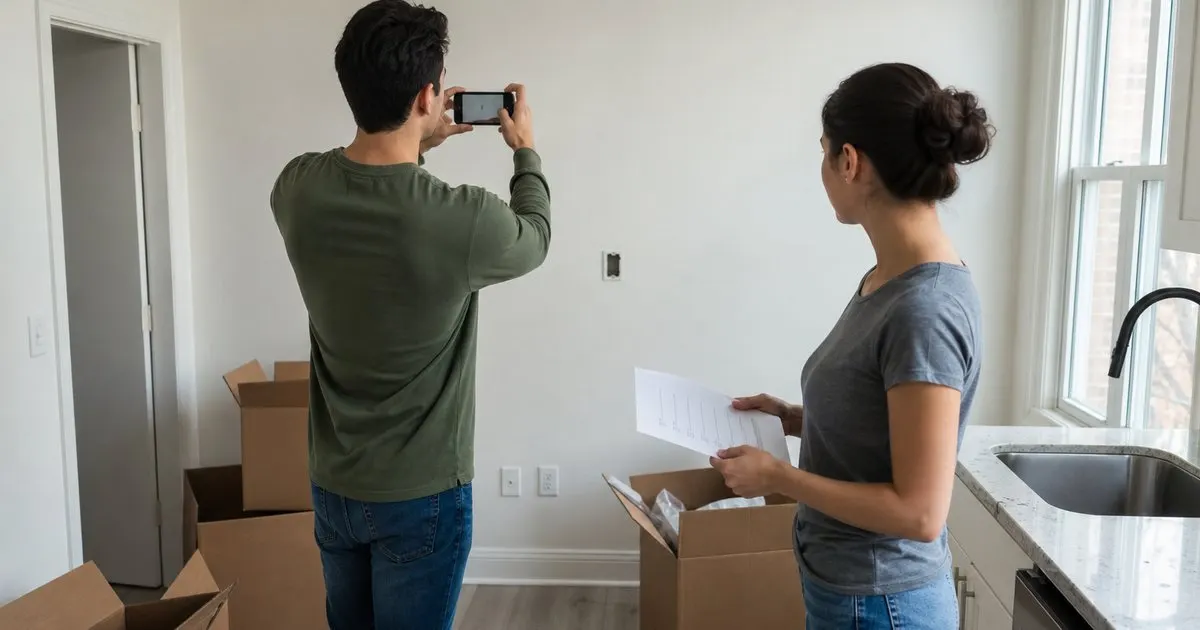
There are situations where an in-person walkthrough is genuinely impractical: the owner lives across the country and has no local manager, the tenant arrives late at night after a long drive, or a family is relocating on a fixed date and the only overlap with the landlord's schedule is a video call. In those cases a structured self-inspection, where the tenant photographs the unit on move-in day following a fixed list, is far better than no move-in record at all and can be nearly as good as a landlord-led one if it is set up correctly. Related: What should a move-out inspection checklist include for a typical rental apartment?
The key phrase is "set up correctly." A tenant handed a set of keys and told to send some photos will send a handful of wide, dim shots of rooms with boxes in them, days later, from a messaging app that strips the timestamps. A tenant given a room-by-room list, a deadline of a couple of days, a way to upload originals, and a clear statement that anything not reported is presumed to have been in good condition will produce something you can use. Related: How should landlords document rental condition room by room before a tenant moves in?
Keep reading: Why do timestamped move-in photos protect landlords during security deposit disputes?, How should landlords document rental condition room by room before a tenant moves in?, What should a move-out inspection checklist include for a typical rental apartment?. See how MoveInSnap helps you move-in and move-out inspection photo logs.
When you should not rely on it
Do not use self-inspection as the sole record when the unit is high-value, freshly renovated, or has a history of disputes. Do not use it when the previous tenant's move-out record is weak, because you will then have no independent baseline at either end of the tenancy. And do not use it when the tenant seems reluctant, because a self-inspection depends on the tenant's cooperation and a half-hearted one is worse than none: it gives the tenant a record that looks like yours but that only shows what they chose to show. Related: Why do timestamped move-in photos protect landlords during security deposit disputes?
There is also an incentive problem to be honest about. A tenant photographing at move-in is motivated to record every flaw, which is actually useful, but they are not motivated to photograph the clean, undamaged surfaces that will matter most at move-out. Your baseline needs both. If the tenant sends thirty photos of small defects and none of the carpet, the countertops, or the walls, you have a list of exclusions rather than a condition record. Ask for full coverage, not just problems. Related: When is the best time to complete a move-in inspection with your tenant?
How to structure a self-inspection so it holds up
Give the tenant the same list you would use yourself: every room, every wall, floor, ceiling, door, window, fixture, and appliance, plus close-ups of any defects with something for scale. Set a short deadline, typically within two or three days of receiving keys, and put in writing that the unit is presumed to be in the condition shown in your own most recent photos except for items the tenant reports. Ask for original files, not screenshots or resized images, and use a system that preserves metadata on upload.
Then do your own pass as soon as you can, even if it is a week later, and even if it is by a local contact or a trusted vendor rather than you. Your later pass will not be a clean move-in baseline, but it will confirm or contradict the tenant's submission while memories are fresh and before wear accumulates. Reconcile the two into one report, send it to the tenant, and note the reconciliation date. MoveInSnap supports tenant-side photo submission against the landlord's list for this workflow, with originals and timestamps kept intact.
What a self-inspection record means at move-out
A tenant-generated move-in record is, if anything, more persuasive against the tenant at move-out than a landlord-generated one, because the tenant cannot argue that the landlord missed something. If the tenant photographed the living room carpet as clean on day one, a stained carpet at move-out is hard to explain away. This is worth saying to the tenant at the start, not as a threat but as an explanation of why full coverage protects them too.
The weakness shows up on the landlord side. If the tenant's photos were sparse and you never did a follow-up pass, the tenant can argue that the missing areas were already damaged and simply not photographed, and you will have nothing to counter it. The way to avoid that is the follow-up pass and the written presumption. With both in place, a self-inspection is a legitimate move-in record. Without them, it is a favor to the tenant that you may regret.
- Self-inspection is reasonable when an in-person walkthrough is genuinely impractical, not merely inconvenient.
- Avoid it for high-value units, weak prior records, or reluctant tenants.
- Require full coverage of clean surfaces, original files, a short deadline, and a written presumption for unreported items.
- Follow up with your own pass as soon as possible and reconcile both into a single report.

Julien Jimenez
Julien Jimenez is an independent software builder based in Paris. He designs, ships, and operates focused SaaS products for small businesses and independent professionals. Read the full author page.
Prove condition with dated photos
Move-in and move-out inspection photo logs. MoveInSnap is built to help you put this into practice.
Start freeMore from the MoveInSnap blog
Why do timestamped move-in photos protect landlords during security deposit disputes?
How should landlords document rental condition room by room before a tenant moves in?
What should a move-out inspection checklist include for a typical rental apartment?
Get the MoveInSnap playbook
Practical guides on move-in and move-out inspections, straight to your inbox as we publish them. No spam, unsubscribe any time.